AUGUST 2, 2026
Graduation Photo Ideas for Standout Grad Portraits
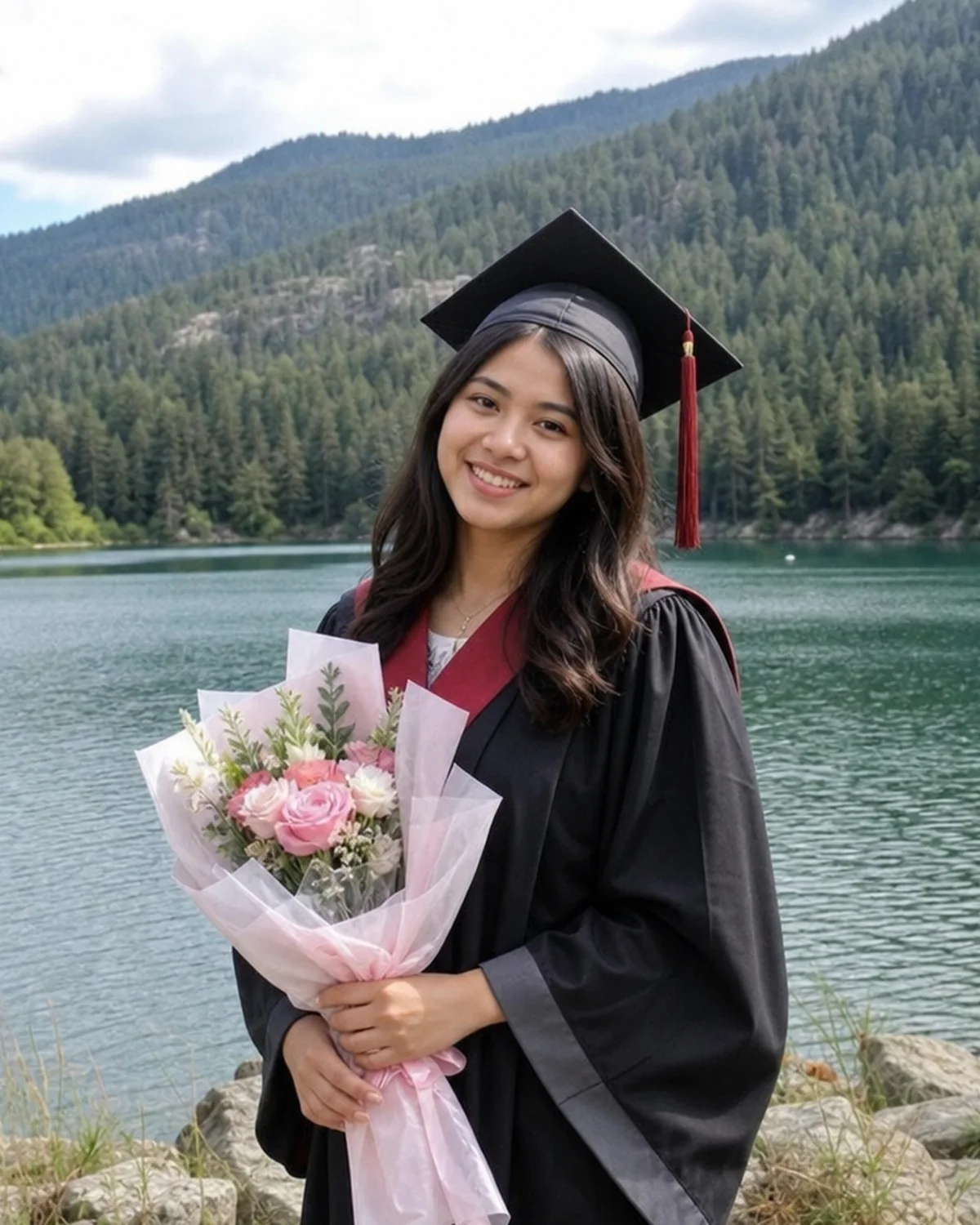
A big batch of graduation photo ideas covering classic portraits, outdoor and golden hour shots, cap tosses, group frames, props, detail shots and campus locations, plus when to shoot, what to wear and how to get grad portraits without a photographer.
Most graduation photo guides tell you to hire a photographer and shoot at golden hour. True, but not much help the night before, when what you actually need is a list of shots to copy.
So that is what this is: a big batch of specific graduation photo ideas, grouped by type. Pull four or five from each section and you end up with a varied set instead of dozens of versions of the same smile. After the ideas you will find the practical parts, including timing, wardrobe, phone settings, and what to do when a real photoshoot is not going to happen. It comes from the team at Vibe Photos, so the AI route gets its own section near the end, limitations included.
In a hurry, or already past the ceremony? Generate a graduation set from a single photo, then come back for the ideas.
Before You Shoot: Build a Shot List
Photographers work from a shot list because memory fails under pressure. Yours does not need to be elaborate. Pick about ten ideas from this page, note the location and time for each, and put them in the order you will shoot them. Group shots go first, while everyone is still around and the gowns are still neat.
Two constraints shape the rest. The first is stamina: a campus session with a friend behind the camera realistically runs 60 to 90 minutes before people stop cooperating. The second is access. Some universities require a permit for tripods, and on ceremony weekend the popular spots have queues, so scout a second-choice backdrop for anything you really want.
If you want a visual reference while you plan, scrolling the photo pack gallery is a quick way to see how different backdrops, outfits and lighting read before you commit to a location.
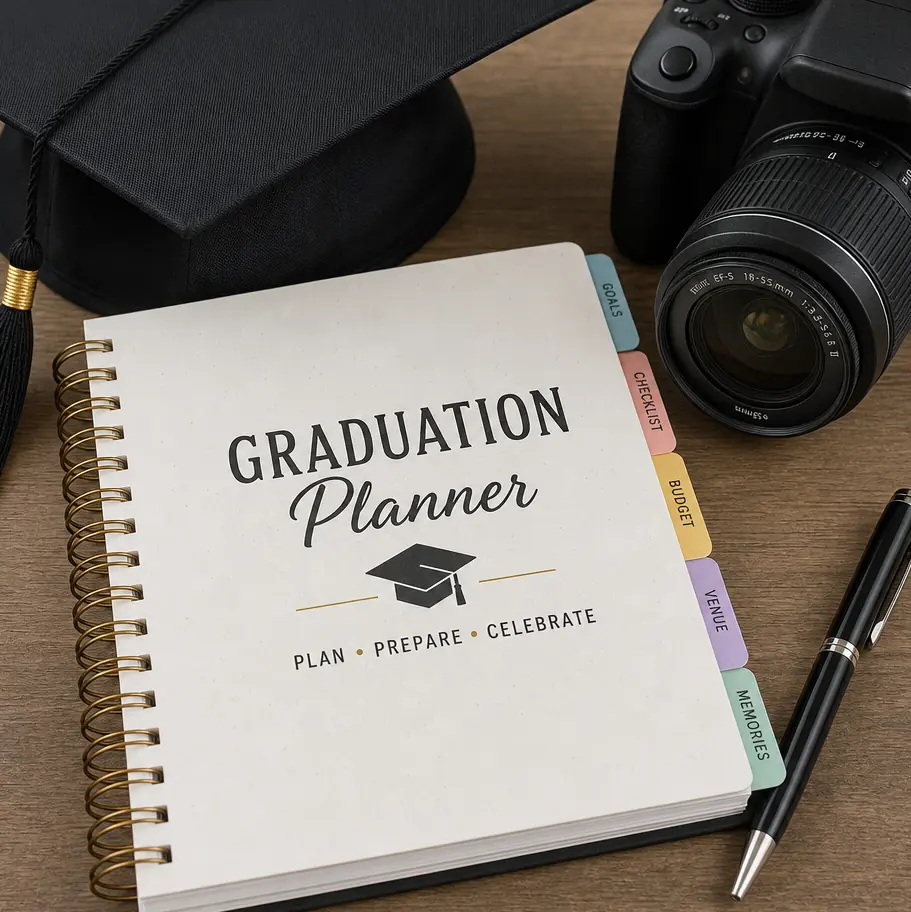
A shot list and a charged battery prevent most of the problems that derail a grad session.
Classic Graduation Photo Ideas Everyone Should Get
Start here. These are the frames that get printed, framed, and mailed to relatives, and they are the ones people regret skipping.
Full-length gown portrait. Stand square to the camera, shoulders back, gown hanging straight, tassel on the correct side. Shoot from eye level so the proportions stay honest.
The diploma hold. Both hands on the diploma at chest height, angled slightly away from the light so the cover does not bounce back as a white block.
Head-and-shoulders portrait. Crop just below the shoulders with the cap in frame. This is the one that still works as a LinkedIn photo two years later, and if the version you shoot is not quite clean enough, the free AI headshot generator will produce a tidier one from the same face.
Bouquet portrait. Flowers add color against a black gown and give your hands a job, which quietly solves most awkward posing.
The tassel turn. Fingers on the tassel, chin slightly down, eyes to the lens. A small gesture, but it dates the photo to the day.
Seated on the steps. Sit on a stair edge with the gown spread and elbows on knees. It reads relaxed in a way standing poses rarely do.
Outdoor and Golden Hour Grad Portrait Ideas
Outdoor light does most of the work, as long as you skip the middle of the day. The hour after sunrise and the hour before sunset both give you low, warm light that wraps around a face instead of carving shadows into it.
Backlit at sunset. Put the sun behind your head so it rims your hair, then expose for your face. The soft haze across the frame is the point, not a mistake.
Silhouette against the sky. Turn side-on, expose for the sky, and let yourself go dark. Best with a clean profile and a raised cap or diploma.
Open shade under a tree. Even light, no squinting. This is the fallback whenever you are stuck shooting at noon.
Water reflection. Get low beside a lake, a fountain, or a puddle after rain, and frame both you and the mirrored version.
Long grass or an open field. Waist-high grass in late light gives you a soft, layered foreground for almost no effort.
Overcast portrait. A gray sky is a giant softbox. Colors stay saturated and you can shoot at any hour, so stop treating clouds as a cancellation.
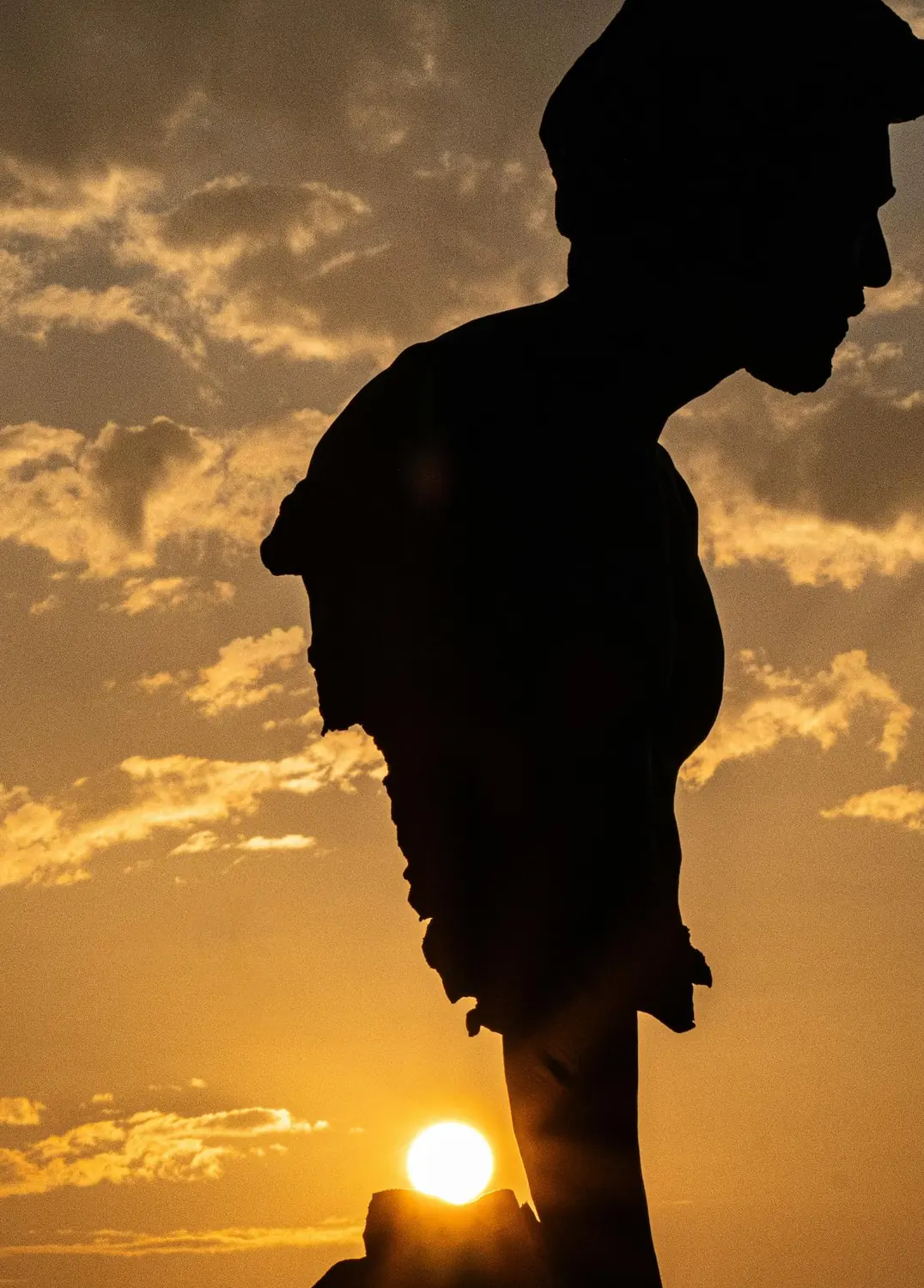
Silhouettes need only a clean outline and a bright sky behind you. Photo by Diego Romeo on Unsplash.
Movement: Cap Tosses, Confetti, and Real Reactions
Static poses fill an album fast. The frames with motion in them are the ones people stop scrolling for, and they are easier to get than they look. Shoot a burst, keep the shutter at 1/500 second or faster, and expect to keep one frame out of fifteen.
The cap toss. Throw straight up rather than forward, and look up at the cap instead of at the camera. Tape or bobby pins keep the cap from taking your hair with it.
Confetti toward the lens. Cup a handful and push it past the camera. Focus on your face first and let the confetti blur.
Walk-away look-back. Walk away from the camera, then turn your head over your shoulder. Reliable, and it puts the gown in motion.
Jump shot. Jump on the count of three and shoot on two. Bend the knees back so the pose reads as joy rather than a stumble.
Gown spin. Turn quickly and let the sleeves and hem flare. Two or three rotations is usually enough before dizziness shows on your face.
The genuine laugh. Have whoever is shooting say something actually funny, then keep firing for three seconds afterward. The real laugh is usually the fourth frame, not the first.
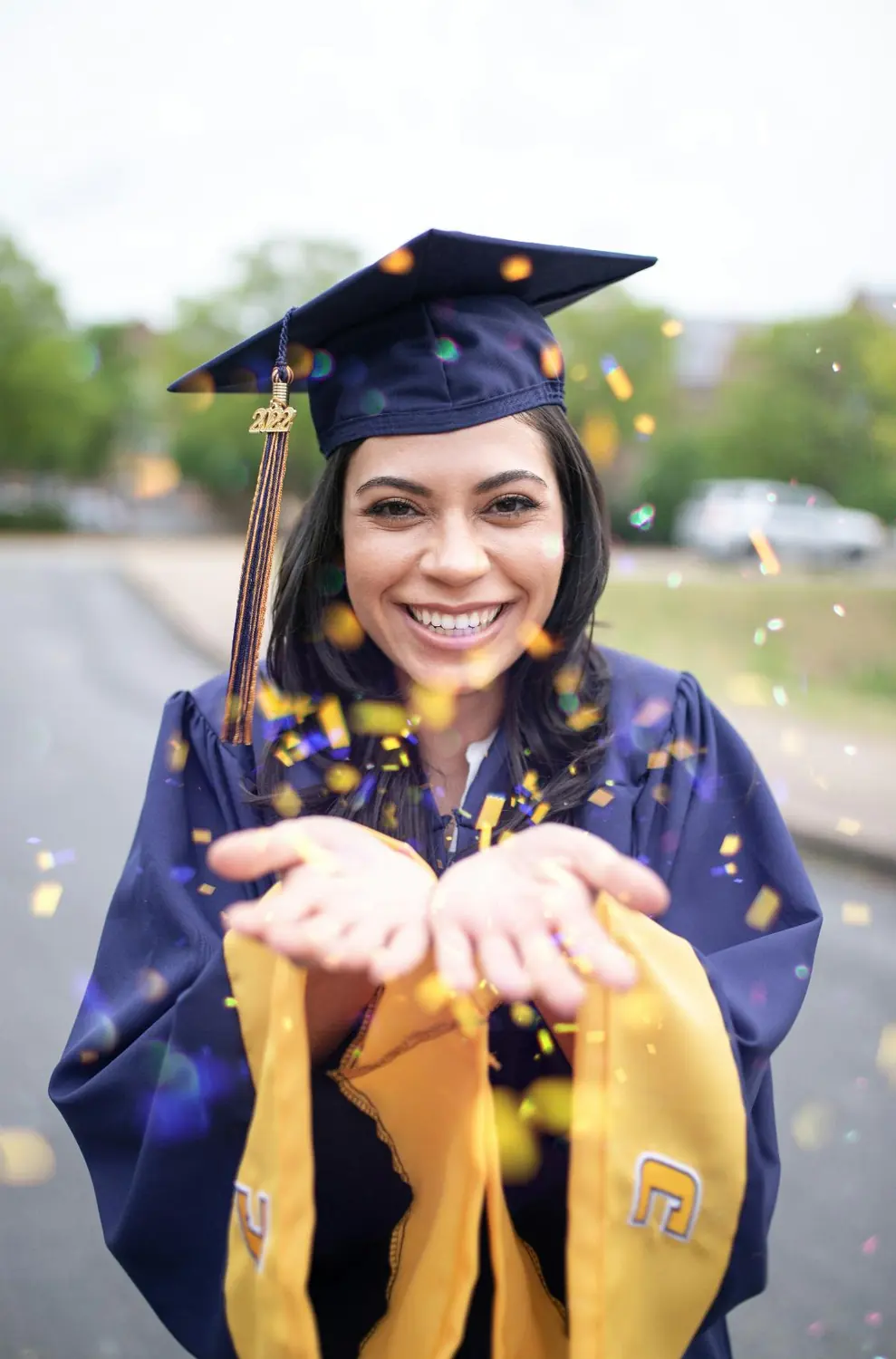
Confetti thrown toward the lens fills the frame without hiding the face. Photo by Sebastian Latorre on Unsplash.
Group, Friends, and Family Graduation Picture Ideas
Shoot these early. Groups scatter, and the longer the day runs the harder they are to reassemble.
The synchronized cap toss. Count down out loud and hold the burst. Somebody always throws early, which is exactly why you need twenty frames.
Roommate lineup. Arrange by height with a half-step stagger so nobody disappears behind a shoulder, and keep the spacing tight.
Parents in the middle. Straightforward, and usually the photo that ends up on a wall at home. Shoot one posed and one immediately after, while everyone is still talking.
Sibling candid. Ask for something playful rather than a pose. Rivalry photographs better than a lineup.
Overhead huddle. Everyone looks up while the camera is held above them. Flattering angle, and it hides a messy background completely.
Handing over the diploma. Pass it to a parent or grandparent and shoot the moment they take it. It carries more than a smile does.

Count the toss out loud and shoot a burst, because someone always jumps early. Photo by RUT MIIT on Unsplash.
Props That Show Your Major or Personality
A prop turns a generic gown photo into a photo of a specific person. One prop per frame is the rule. Two starts to look like a stock image about achievement.
Tools of your major. Paintbrushes, a stethoscope, a soldering iron, a laptop open to your thesis. Shoot it in your hands, then again as a flat lay on a table.
A stack of your textbooks. Held, balanced, or abandoned on the grass beside you. The battered ones photograph better than the clean ones.
Your instrument. Play it rather than hold it. Posed instrument shots always look posed.
Sports kit under the gown. Jersey visible at the neckline, cleats on. It reads instantly without needing an explanation.
The decorated cap. Shoot the top of the cap on its own, then a second frame with your face soft behind it.
A pet in the frame. Chaotic, and worth it. Have someone hold treats just behind the lens.
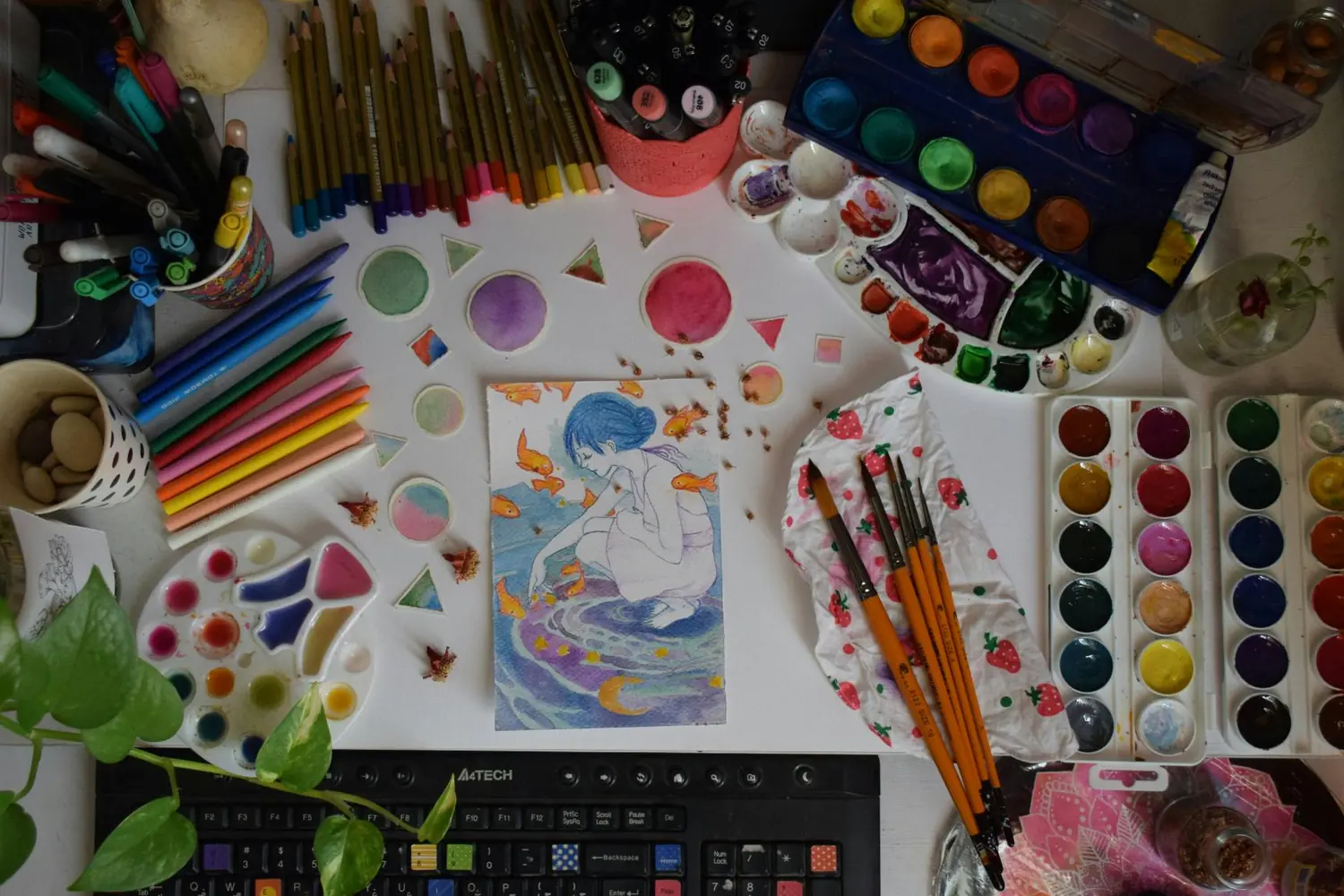
A flat lay of the tools from your major works as a scene-setter between portraits. Photo by armina arhm on Unsplash.
Creative Graduation Photoshoot Ideas Worth the Extra Effort
These take a little more planning, so pick one or two rather than trying the whole list in a single session.
Mural or street-art wall. Color and scale with no other setup required. Stand slightly off-center so the artwork still reads.
Framed by a doorway or arch. Shoot through the opening and let the dark edges push attention inward.
Hard shadow and high contrast. Midday sun is normally the enemy, but pointed at a plain wall it gives you graphic, editorial shadows on purpose.
A monochrome set. Convert three or four frames to black and white as a deliberate group rather than one at a time. It makes the album feel edited.
Reflections in glass. Shoot into a window or a glass building facade so the campus layers over your reflection.
High angle or drone. Lie on the grass surrounded by friends, or shoot from an upper floor down onto the quad. Check the drone rules for your campus first.
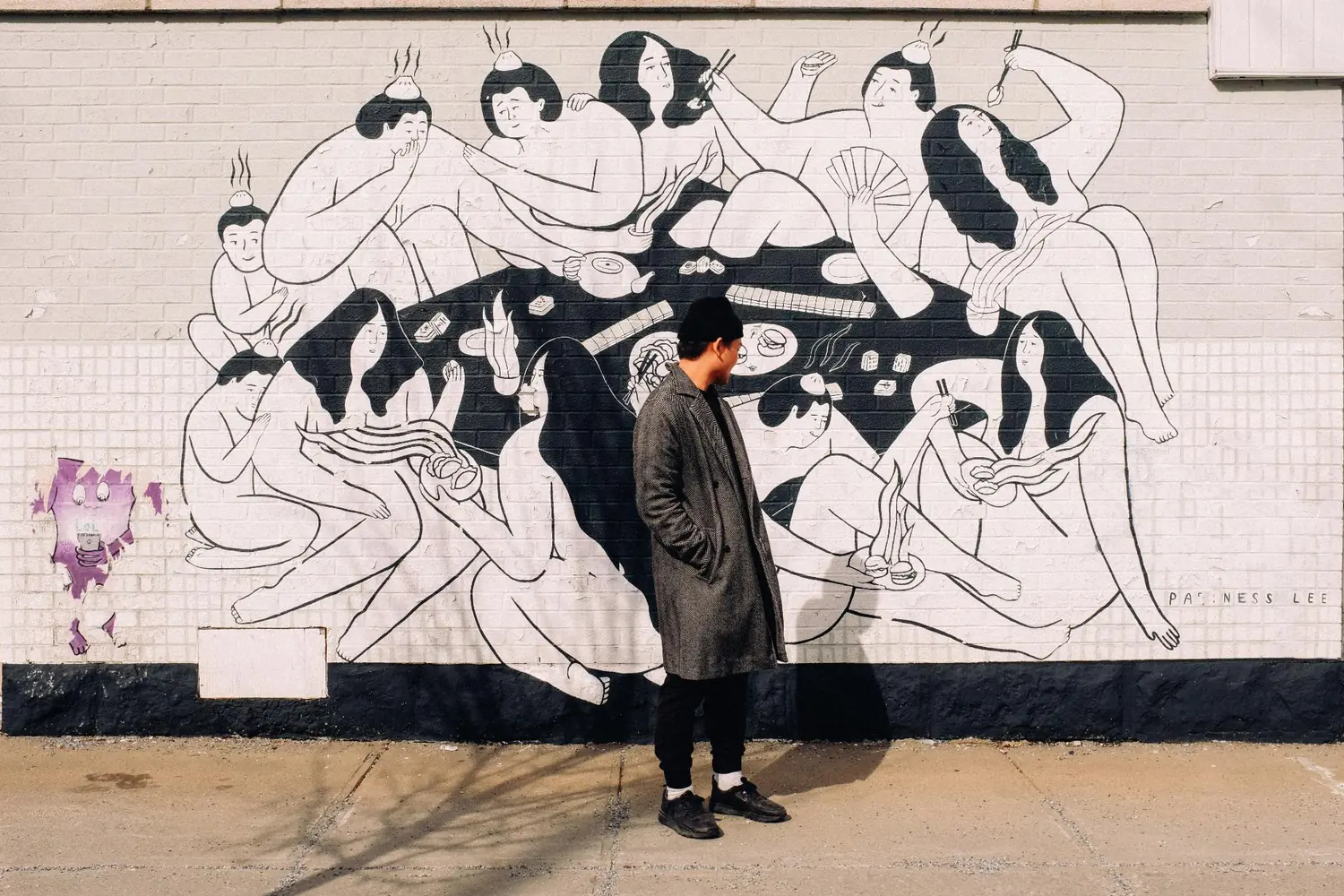
A mural gives you color and scale without any other setup. Photo by charlesdeluvio on Unsplash.
Detail Shots Most People Forget
Detail frames are the connective tissue of an album. They take seconds, they need no posing, and they are what make a set of graduation pictures feel like a story instead of a folder of portraits.
Diploma close-up. Fill the frame with it and let your face fall soft behind.
Hands and the class ring. Shot from above, resting on the gown.
The cap on the ground. Placed on grass, steps, or a library table after the ceremony.
Shoes under the hem. Especially if they are impractical, which they usually are.
The tassel and year charm. Close enough to read the numbers.
Cards and handwritten notes. Spread out with the cap, shot from directly overhead.
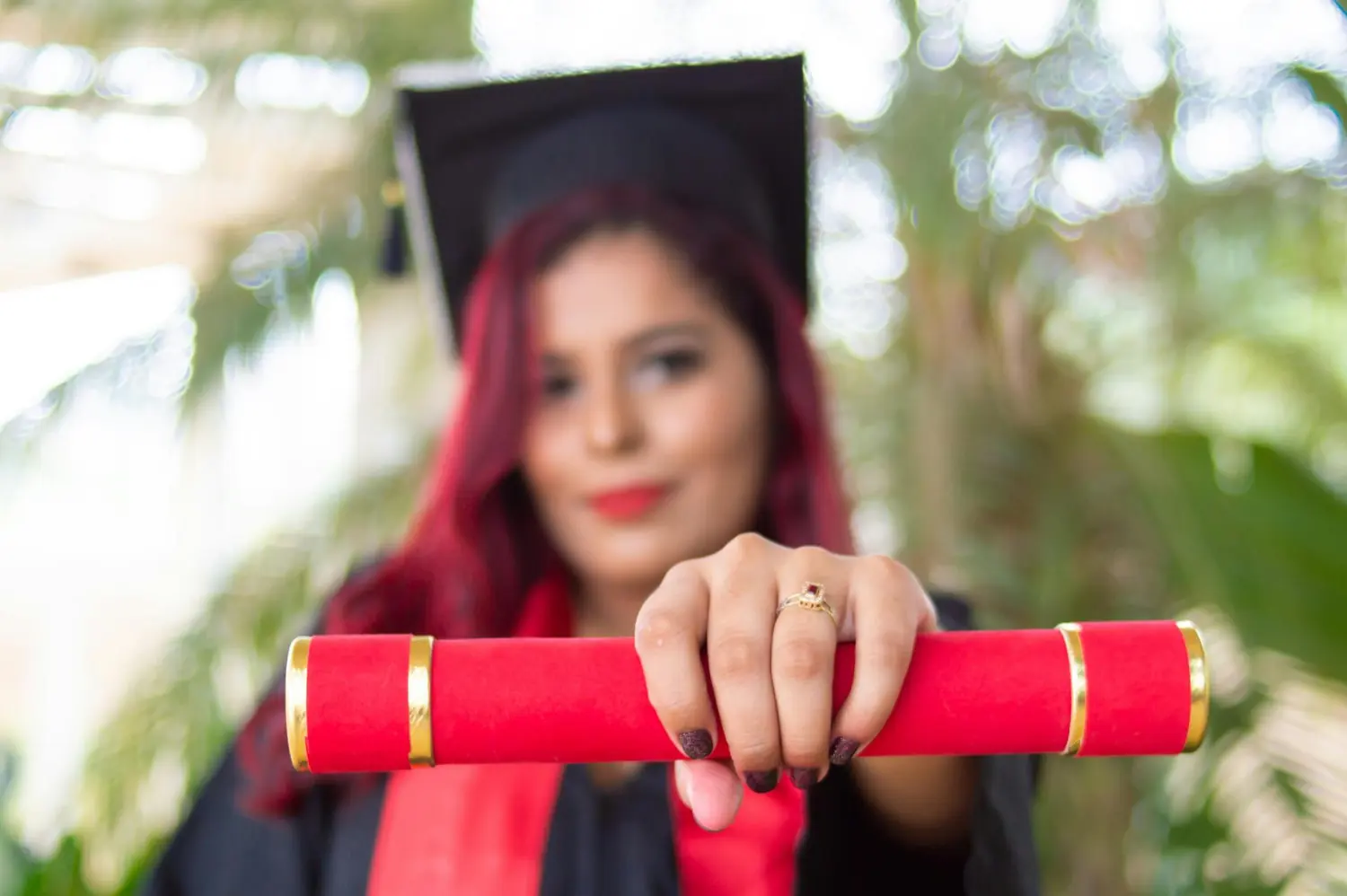
Fill the frame with the diploma and let the face fall soft behind it. Photo by Felipe Gregate on Unsplash.
Campus Locations Worth Scouting
Campus locations carry meaning that a rented studio cannot, and they cost nothing. Walk the route a day early at the same hour you plan to shoot, so you know where the light lands.
The main gate or entrance sign. Obvious, and worth doing anyway. Arrive early, because everyone else wants this one too.
Library steps. Wide, symmetrical, and they work for both solo portraits and a group of eight.
Your department building. More personal than the landmark shot, and usually far less crowded.
The lecture hall you lived in. Sit in your usual seat in an empty room. Quietly one of the best frames you will get.
The stadium or field. Empty seats behind you give scale, and the light is unobstructed.
Wherever you actually studied. The corner table, the stairwell, the loading dock where you took calls. Nobody else will have this photo.
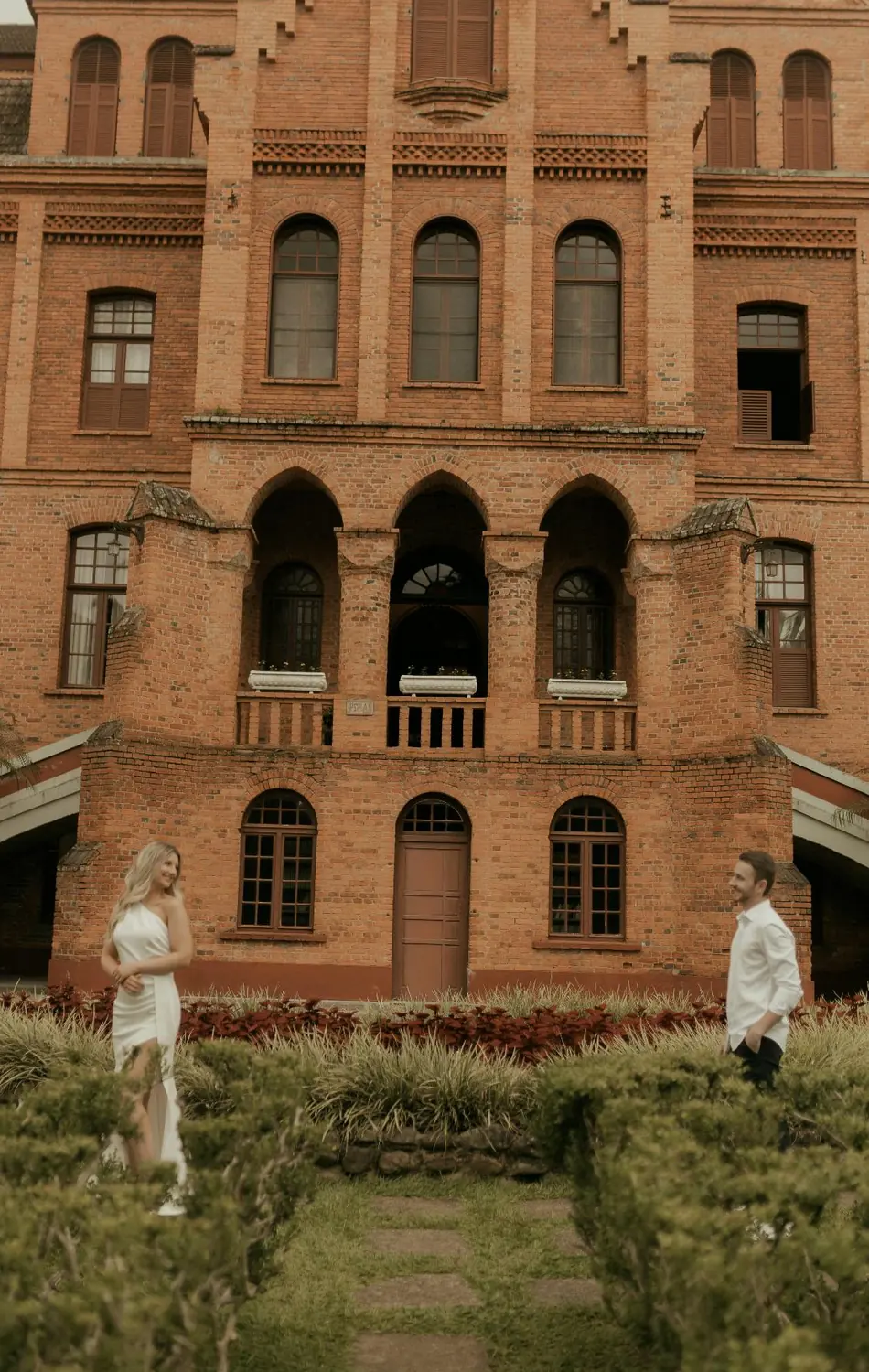
Wide architecture shots work best when you stand off-center. Photo by Alexander Mass on Unsplash.
When to Take Graduation Photos
Most people shoot twice. The planned session happens two to eight weeks before the ceremony, when you can borrow the gown, pick the weather, and take your time. Ceremony day itself is for candids only, because you will have roughly four rushed minutes and a crowd behind you.
If you are booking a photographer, two to three months ahead is normal for spring graduations, and the good ones fill earlier than that. Confirm your gown pickup date before you book anything, since that is the constraint that actually moves.
What to Wear Under the Gown
Solid colors photograph better than patterns, which tend to buzz against the gown's texture. Keep the neckline visible, because a collar or a simple chain gives the eye somewhere to land. Hemlines should sit above the gown's edge so you do not get two competing hems.
Steam the gown the night before. They ship folded, the creases are obvious in photographs, and no amount of editing removes them convincingly. Shoes matter more than expected in full-length frames, so pick something you can also stand in for an hour.
Getting Sharp Shots With a Phone or a Camera
Phone first, since that is what most of these sessions are shot on. Clean the lens, then use the 2x or 3x telephoto rather than the wide lens, which distorts faces at portrait distance. Tap your face to lock focus and exposure, and use portrait mode sparingly because it still fumbles the edges of a tassel.
On a camera, f/2 to f/2.8 at 50mm to 85mm covers nearly every idea on this list. Keep the shutter at 1/500 second for anything with movement, and let ISO rise rather than accepting a blurred cap toss.
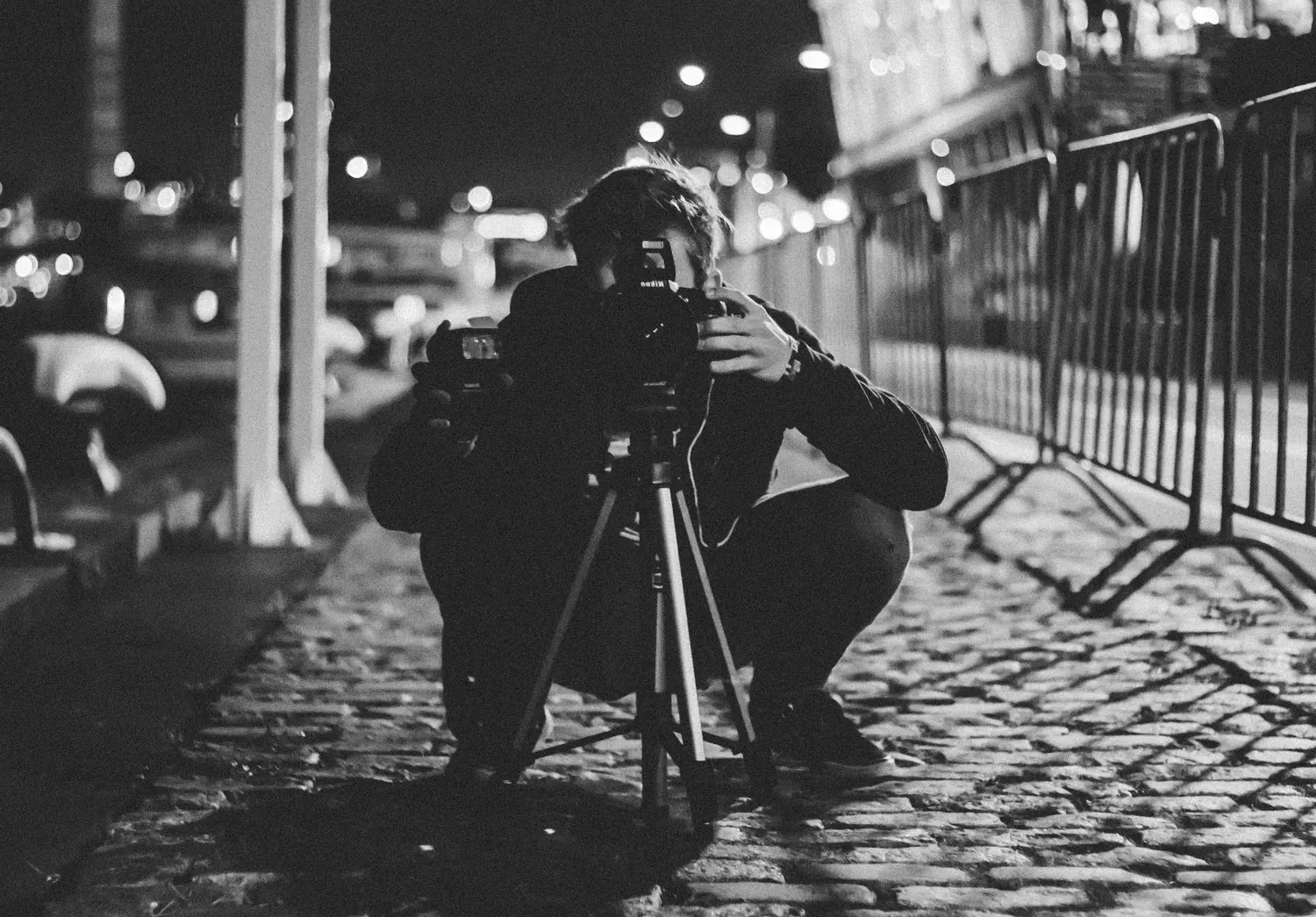
A tripod earns its weight after sunset, when shutter speeds start to drop. Photo by Harold Wijnholds on Unsplash.
A tripod is worth carrying for two situations: any shot after sunset, and any shot where the photographer needs to be in the frame. Otherwise it mostly slows you down and, on some campuses, requires a permit.
Editing Without Overdoing It
Straighten first, crop second, then adjust exposure and white balance. Most graduation photos need warmth pulled down slightly, because gowns bounce a surprising amount of color onto skin. Black gowns also lose detail fast, so lift the shadows before you touch contrast.
Resist heavy skin smoothing. It ages badly, and it is the single clearest sign of an over-edited grad portrait. Whatever you do, apply it across the whole set so the album looks consistent.
Some problems are past what a slider can fix: a stranger wandering through the background, a blown-out sky, a power line across the quad. Those are worth handing to AI image editing, which works from a written instruction instead of a brush. If you are folding older family graduation photos into the album, photo restoration is the tool for the faded and creased ones.
No Photographer? Generate Grad Portraits From One Photo
Sometimes the shoot does not happen. The ceremony is on a different continent, the gown arrives the morning of, it rains for a week, or the graduate simply refuses to spend ninety minutes posing. An AI photo pack covers that gap: upload one clear photo to the Graduation photo pack and you get a set of styled graduation portraits with cap, gown, and campus-style backdrops, without booking anyone.
It is worth being straight about what this is good for. It handles solo portraits, outfit tests, and profile pictures well, and it is a reasonable way to see which of these graduation pic ideas suit your face before you commit to a real session. It does not replace the group cap toss or the photo of your grandmother holding your diploma. Those you have to go and take.
Worth knowing before you start: a full pack is 48 credits for eight photos, and a new account opens with 15 free credits. That covers a couple of images, not a complete run, so a full pack needs a paid plan rather than the signup bonus on its own. The pricing page has the current plans and one-off credit bundles.
Other Photo Packs Worth a Look
Graduation is one of more than sixty styled sets on the site, and a few sit right next to this one. If the vintage school-portrait look appeals more than cap and gown, the AI Yearbook pack leans into that aesthetic instead. For the messier side of student life, College Party covers the flash-lit, red-cup, kitchen-at-2am energy that formal portraits never capture.
The more useful group is what comes after graduation. A grad portrait is not a job-application photo, and the professional packs exist for that: corporate headshots for a first job or a team page, CEO headshots when you need something more formal, and actor headshots if you are heading into auditions rather than interviews. For a single clean professional frame with no pack involved, the free AI headshot generator is enough.
Beyond those, the catalogue runs across festivals, travel, fashion, fitness and holiday themes. Browse all photo packs if you want to see what else fits the person you are shooting for.
Graduation Photo FAQ
When should you take graduation photos?
Two to eight weeks before the ceremony for a planned session, once you can access the gown. Keep ceremony day for candids, since there is rarely time for anything staged.
What should you wear for graduation pictures?
Solid colors, a visible neckline, and a hemline shorter than the gown. Steam the gown beforehand, and choose shoes you can stand in for an hour.
How many graduation photos do you need?
Ten to fifteen keepers covers it: three or four classic portraits, two or three with movement, a few group frames, and a handful of detail shots. Shooting for more than that usually produces variations rather than new photos.
Can you take good graduation pictures with a phone?
Yes, and most people do. Use the telephoto lens instead of the wide one, shoot during golden hour or in open shade, lock exposure on the face, and take bursts for anything involving a cap toss.
Where should you take graduation pictures?
Somewhere with meaning beats somewhere photogenic. The main gate and library steps are reliable, but your department building, your usual seat, or the place you actually studied will age better.
How much do graduation photos cost?
A professional session typically runs a few hundred dollars depending on your city and how many prints are included. A friend with a decent phone costs nothing. An AI pack lands much closer to the free end: eight photos costs 48 credits, which is roughly $0.65 to $0.80 on a subscription, or about $3 to $5 if you buy credits one-off.
Final Thoughts
The graduation photos people keep are rarely the most technically polished ones. They are the frames with something specific in them: a real laugh, a cluttered desk, a friend halfway through a jump. Pick the ideas from this list that only make sense for you, and let the standard gown portrait be one shot among many rather than the whole session.
Short on time, or already past the ceremony? The Graduation photo pack on Vibe Photos turns a single uploaded photo into eight styled graduation portraits in a few minutes, which is a fast way to test outfits and backdrops before a real shoot, or to fill the gaps afterward.